Style & Silhouette
A-Line vs. Mermaid vs. Ball Gown Dresses
A-line, mermaid, and ball gown dresses create three very different experiences. Start with the shape you want to see in photos, then compare how each one feels to walk, sit, and dance in before you make a choice.
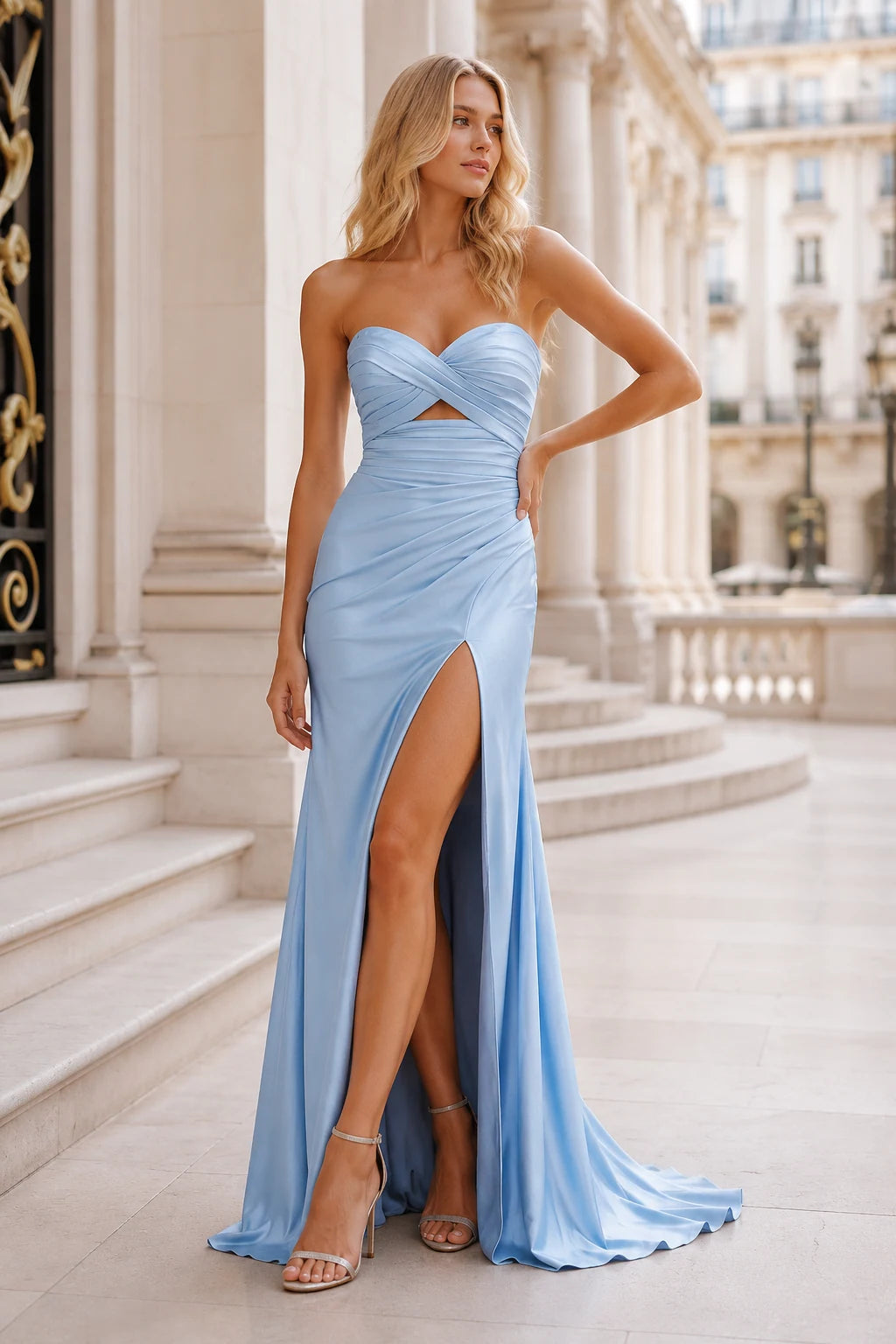
A-line: a skirt that widens from the waist
An A-line dress is fitted through the bodice and opens gradually from the waist, creating a soft A-shaped line. It can be minimal in satin, light in chiffon, or full of texture in tulle. Because the skirt does not cling closely through the legs, many people appreciate the room it gives them to walk, sit, and dance.
A-line works across many levels of formality. Choose a cleaner fabric and narrow skirt for a refined look, or add layers, shimmer, and a structured bodice for a more dramatic entrance. It is a strong choice when you want shape and presence without committing to a very fitted skirt or the volume of a ball gown.
Mermaid: a close fit with a dramatic release
A mermaid dress follows the body more closely through the bodice and hips, then opens near the knees or lower skirt. The result can feel sculptural, sleek, and intentionally dramatic. Stretch fabric, a slit, a lace-up back, and the exact point where the skirt flares all influence how the dress moves.
The best way to decide on a mermaid silhouette is to think about movement, not body rules. Some designs are easy to walk in; others feel more restrictive because of their fabric or construction. Check the product details, consider the dance floor and stairs at your venue, and choose the version that lets you enjoy the evening.
Ball gown: volume, structure, and ceremony
A ball gown pairs a fitted bodice with a fuller skirt. It brings immediate presence and can create a memorable silhouette in photos, especially in a formal venue. Tulle layers, satin, pockets, corsetry, and a sweep of color all change the personality of the gown, from romantic to architectural.
Volume is part of the experience. Consider transportation, seating, the dance floor, and the space around you. A ball gown can be a joyful choice when the event calls for it, but it benefits from a first try-on with your planned shoes and undergarments so the skirt length and support feel right.
Make the comparison in motion
For a concrete comparison, PromSpark's Kallisse page describes a sweetheart neckline and an A-line silhouette with a satin finish; Estria is described with a sweetheart neckline and a mermaid silhouette with a satin finish. Holding the neckline and finish roughly constant lets you focus on where the skirt widens. Both pages ask shoppers to confirm fabric, lining, and stretch, so the word satin should not be treated as evidence of stretch or identical construction.
If you are torn between silhouettes, save three or four styles and compare their details side by side. Look at neckline, support, fabric weight, skirt volume, and whether the dress has a slit or an adjustable back. These elements often make a bigger difference to comfort than the silhouette label alone.
There is no silhouette that every person should avoid or automatically choose. The right one is the dress that reflects your taste, works for your event, and gives you enough confidence to stop thinking about the dress once the night begins.
Use the same movement check for every silhouette
Compare two dresses with the same questions instead of giving one a pass because you like its silhouette. Before buying, ask where a fitted skirt starts to flare, whether the fabric has stretch, whether the skirt is lined, and whether a train can be secured for walking. A slit, lace-up back, or photograph of a model taking a long stride does not answer all of those questions. If a feature is not stated, treat it as unknown.
During an indoor try-on, put on the shoes and underwear you intend to use. Walk a few normal steps, turn around, sit on a chair, and stand again without forcing the fabric. For a fitted mermaid shape, pay attention to stride length and tension across your thighs when seated. For an A-line or ball gown, check where the layers fall around your feet and whether you can sit without trapping the skirt. Stop if a seam or fastening feels under strain.
Look at the hem while standing naturally, not only while posing. A long front hem and a train are different questions: shortening the front does not automatically solve handling the back. Ask an alterations professional about the finished dress before assuming it can be shortened or given a bustle. Decoration, layers, and construction can affect what they recommend; do not plan around an unconfirmed alteration.
If the dress needs constant lifting or repositioning during ordinary movements, write down the problem rather than deciding you will manage it all night. Keep the garment and tags in the condition required by the return policy while you contact support. Your goal is a dress you can use for the event you have, not a successful five-second pose.
Questions, answered
Frequently asked questions
Is an A-line dress less formal than a ball gown?
Not necessarily. Fabric, color, detail, and the event setting determine formality as much as the silhouette.
Can I dance in a mermaid dress?
It depends on the exact dress and fit. Ask about fabric and flare placement, then check walking, turning, and sitting without forcing the fabric during your try-on.
Does a slit guarantee that a fitted dress is easy to walk in?
No. The lining, fit through the thighs, fabric, hem, and position of the opening also matter. A photograph cannot replace a movement check.
Do ball gowns work for smaller venues?
They can, but consider stairs, seating, transportation, and space on the dance floor before choosing a very full skirt.
Which silhouette should I choose for prom?
Choose the one that fits your style, your venue, and how you want to move. There is no universal best silhouette.
Related guides
Related shopping & help
Your next step
Keep the decision clear.
Use the details that matter for your event, then explore the styles and fit information at your own pace.
Explore Prom Silhouettes